




































The Dark Side of Bug Bounty Platforms: Scams, Bias, and Pay Disputes
An in depth look at how bug bounty platforms like HackerOne, Bugcrowd, hackerone and AIl specific programs are frequently accused of unfair practices, from misclassifying critical vulnerabilities to refusing payouts and silencing researcher voices. Drawing from firsthand accounts and public Medium articles, this investigation reveals why security researchers are increasingly distrustful of commercial bug bounty platforms.

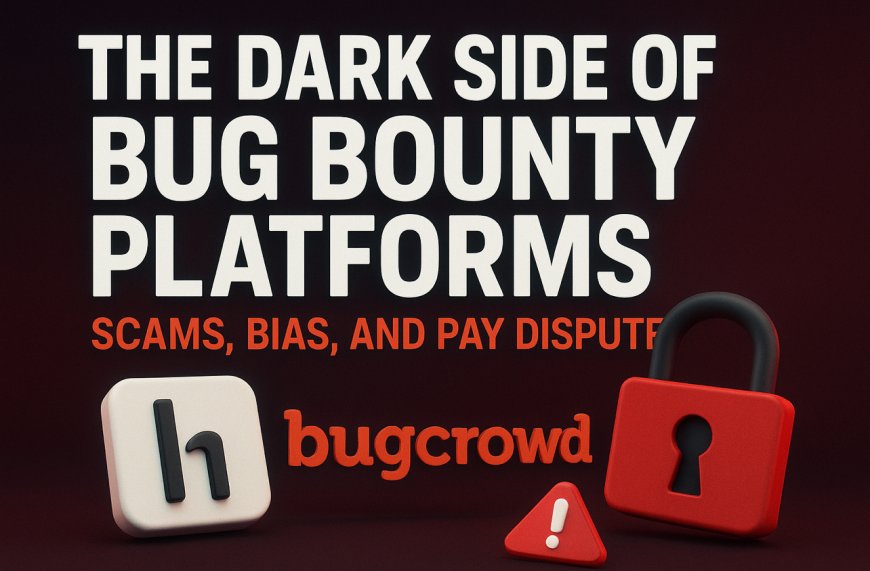
Bug bounty platforms are often promoted as the future of digital security—a place where ethical hackers report vulnerabilities, get rewarded, and help make the internet safer.

But behind the glossy image, many researchers are now exposing systematic abuse, unfair treatment, and outright scam tactics by major platforms like HackerOne and Bugcrowd.
Recent Medium articles and firsthand testimonies highlight just how deep the issues run.
Personal Experiences: Voices from Medium
Several ethical hackers have shared their experiences:
- The rise of scammer bug bounty programs — and the reason I quit bug bounty hunting
→ Reports marked as duplicates or informational, mediation blocked, and bugs silently patched without payout. - Why I don’t use Bugcrowd
→ Mishandled CDN cache attack, poor triage response, and zero acknowledgment for valid findings. - Bug bounty platforms are a scam (mostly)
→ Exposes systemic payout avoidance and researcher exploitation. - $1250 for 3 stored XSS and PII disclosure! FIS scammed me and Bugcrowd covered it
→ Corporate clients win disputes, while researchers lose payouts—even when evidence is solid.
Scam Tactics and Common Patterns
1. Misclassification & “Duplicate” Tagging
- Severe vulnerabilities (like admin account takeovers) downgraded to duplicates of less impactful bugs.
- Example: Admin takeover marked as a duplicate of a session hijack—even when technical differences were proven.
2. Silent Patching Without Reward
- Companies patch bugs after disclosure but close reports as Not Applicable.
- Researchers receive nothing, while platforms advertise “big payouts.”
3. Incompetent Triage & Lack of Technical Knowledge
- Complex attacks (cache poisoning, API abuse, etc.) misunderstood or dismissed.
- Repeated requests for “more impact” even when proof-of-concept is clear.
4. Platform Bias & Favoritism
- New researchers ignored.
- “Star hackers” rewarded for the same or even weaker findings.
5. Reputation Manipulation
- False penalties for duplicates or “low quality” reports.
- Reputation scores used as control—affecting trust and payouts.
Real-World Case Studies
- Circle (HackerOne): Critical admin takeover → marked duplicate → mediation denied.
- Dropbox (Bugcrowd): API leaks patched silently → report closed as Not Applicable.
- Contentful CDN: Cache poisoning mishandled → triage team “unable to reproduce.”
- CA.gov (Bugcrowd vs Open Bug Bounty): Same XSS bug → accepted by Open Bug Bounty, rejected by Bugcrowd.
- AI Bug Bounty Programs: Reports labeled “spam” or out of scope → no mediation, reputation damage.
Why Do These Scams Persist?
- Business Priorities: Platforms protect corporations, not researchers.
- PR vs Reality: Big million-dollar bounty headlines vs. actual researcher struggles.
- Triage Failures: Lack of expertise = mishandled reports.
- Transparency Gaps: Independent platforms show better fairness.
Recommendations for Researchers
✅ Explore Alternatives: Platforms like YesWeHack or government programs are more reliable.
✅ Document Everything: Always keep PoCs, screenshots, emails, and timestamps.
✅ Try Open/Nonprofit Platforms: Open Bug Bounty is transparent, though payouts may be smaller.
✅ Push for Public Disclosure: Share rejected findings on Medium, Reddit, or personal blogs to build awareness.
Conclusion
Bug bounty platforms promised fairness, transparency, and rewards—but reality is far different.
With systematic scams, payout denials, triage incompetence, and biased favoritism, the ethical hacking community must rethink its reliance on HackerOne, Bugcrowd, and similar platforms.
The way forward may be community-driven disclosure and independent platforms—where hackers are treated with respect and security flaws are addressed transparently.